How to ask for a tattoo deposit without losing the client booking
Transforming the initial payment from a transactional friction point into a formal commitment to the creative process

• Deposits should be framed as a commitment to the design process rather than a mere administrative fee.
• Clear communication about how prepayments cover research and studio time reduces ghosting.
• Strategic pricing of deposits, whether flat fees or percentages, depends on the project's complexity.
• Professional deposit policies serve as a natural filter for unreliable clients, securing the artist's financial health.
The moment you ask for upfront payment is usually a point of friction when talking to a potential client. You’ve probably been through this: a promising lead reaches out, asks a bunch of questions, sends references, and the conversation flows well—but the second you mention the deposit, they disappear and stop replying. That sudden silence isn’t necessarily a rejection of your work; it’s often a reaction to how the payment was introduced.
To fix this, your approach needs to shift from just asking for money to confirming commitment.
The client needs to understand that the initial payment isn’t a random fee: it’s what actually secures their spot in your schedule and guarantees the time you’ll spend creating their custom design.
When you frame it around the value of your time, the payment starts to feel like a natural step in a professional service.
Instead of just sending your payment details and saying you’ll block the date, explain that this is the official start of the project. Let them know the deposit covers:
- your research time;
- the creation of a custom design;
- and locking in a date that won’t be offered to anyone else.
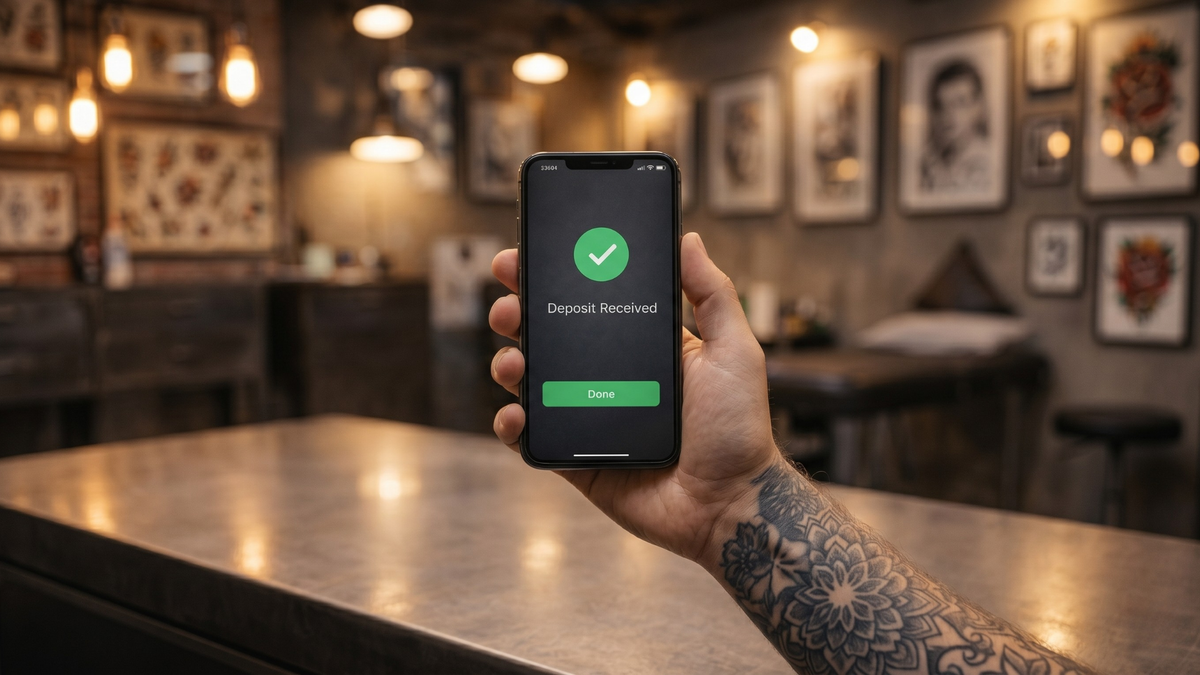
This shifts how the client sees it. It stops feeling like an “empty fee” and starts feeling like the first step of their tattoo—something that will be deducted from the final price. On top of that, always offering two date options and making the booking dependent on sending proof of payment creates a natural sense of urgency without pressure.
To make this work in real life, it helps to have a script that feels human and natural. Imagine you’ve been talking for a while, going over references, and you’re both excited about the idea. The payment message doesn’t need to sound cold or corporate. Here’s an example of a more casual but structured message you can adapt to your own style when it’s time to lock in the date:
Example approach:
“Hey [Client’s Name], I really liked the references you sent. I’m sure I can make the project even better with a few touches like [add a couple small ideas to make it feel more personal]. For me to start working on your design and lock in our date, I work with a deposit of [Deposit Amount]. This amount gets deducted from the total on the day of your session. I’ve got [Date 1] or [Date 2] available, what works best for you? Once you choose, I’ll send over the payment details so we can make it official.”

How to set your deposit amount: flat fee or percentage
Once your communication is dialed in and you’ve got your script ready, the next step is deciding how much to charge. This is a strategic decision, because it directly impacts your cash flow and how committed the client is financially.
In practice, there are two main ways to structure this: a flat fee or a percentage of the final tattoo price.
Flat fee
A flat fee usually works well for quicker, more straightforward pieces—it’s simple and easy to manage.
Percentage
On the other hand, charging a percentage is often safer for larger-scale or realism projects that require multiple sessions, since the client’s commitment matches the time and complexity involved.
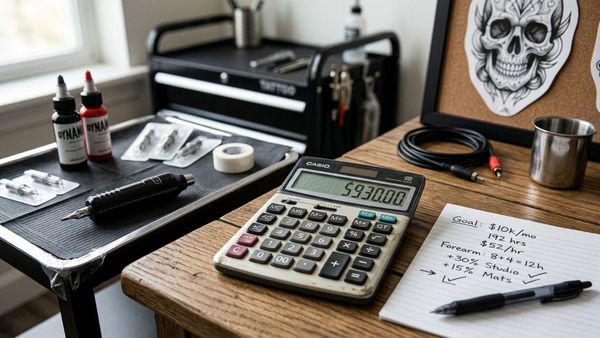
Before setting your deposit rules, you need to be clear about your pricing and how much your time is worth. If you’re still unsure about the final cost, it’s worth learning how to price a tattoo before calculating the deposit. The deposit is just one part of a bigger financial plan, and confidence when charging comes from knowing your pricing is solid.
Having a professional deposit policy naturally filters out people who aren’t ready to invest in their own tattoo. The ones who drop off when they hear about the deposit are usually the same ones who would cancel last minute. Staying firm on this protects your income, keeps your schedule optimized, and teaches your audience to respect tattooing as the specialized service it is.